Anno Mitchell

I'm experiencing some technical difficulties with the resources attached to this site, please bear with me.

This page documents the development of Generative Shipwrecks. It is intended to give context for a current application to Arts Council England's National Lottery Project Grants, showing the trajectory of the work and the direction of the next research phase.

This project investigates how AI systems can construct a performative archive rather than a static record. One that speaks, drifts, accumulates, and forgets. Beginning with the 1967 wreck of the Torrey Canyon, the work has expanded into a multi-layered exploration of maritime disaster, oil infrastructure, geological time, and submerged landscape.

Rather than reconstructing historical events, the project builds generative systems in which archival fragments, speculative narratives, and data-driven materials are continuously produced and distributed. The archive behaves less like a catalogue and more like an ecology — fragments surfacing, overlapping, receding.

The first fully public presentation of the work took place at Laundrette, Bristol, in January 2026. The installation derived from thousands of recorded shipwreck coordinates. Each wreck location was translated into a short audio fragment, spoken in a neutral archival tone, and positioned spatially according to its bearing from the installation site.

The system functioned like sonar. From a central listening point, the archive swept clockwise around the room. Shipwrecks emerged as intermittent signals in geographic relation to the space. Over time, repetition and accumulation transformed administrative language into something incantatory and atmospheric.

Holding Space, Bristol, 2026

All the Wrecks in the World — Bristol installation documentation, 2026

The broader installation system incorporates multiple simultaneous audio streams distributed across a grid of speakers. Four types of material operate concurrently: archival data streams structured from cleaned datasets; speculative narrative fragments reconstructing plausible transmissions; character-based voices; autonomous narrative entities derived from the archive; and durational oceanic material referencing geological deep time.

The result is not a singular storyline but a layered environment in which listeners assemble meaning through movement and duration.
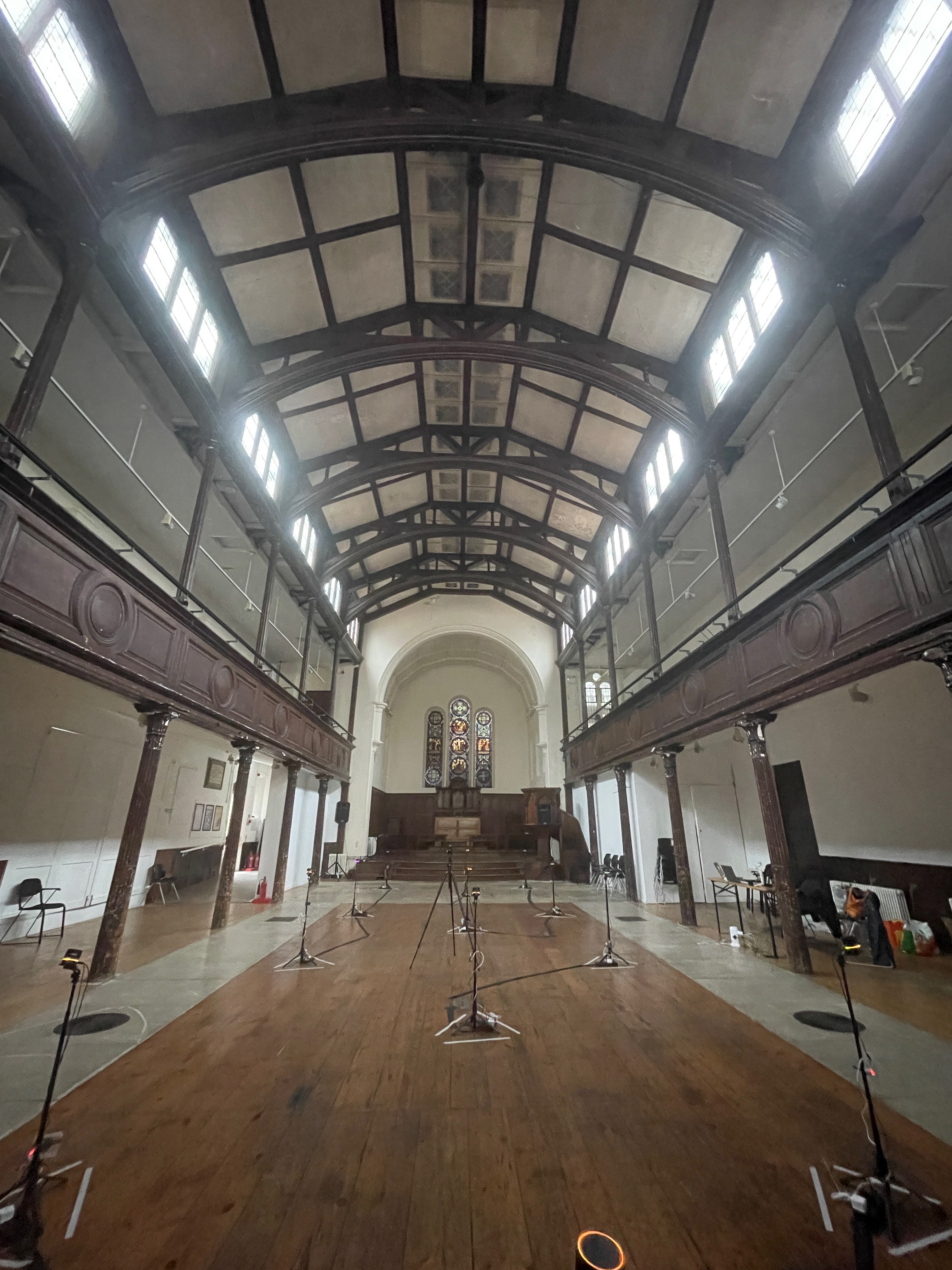
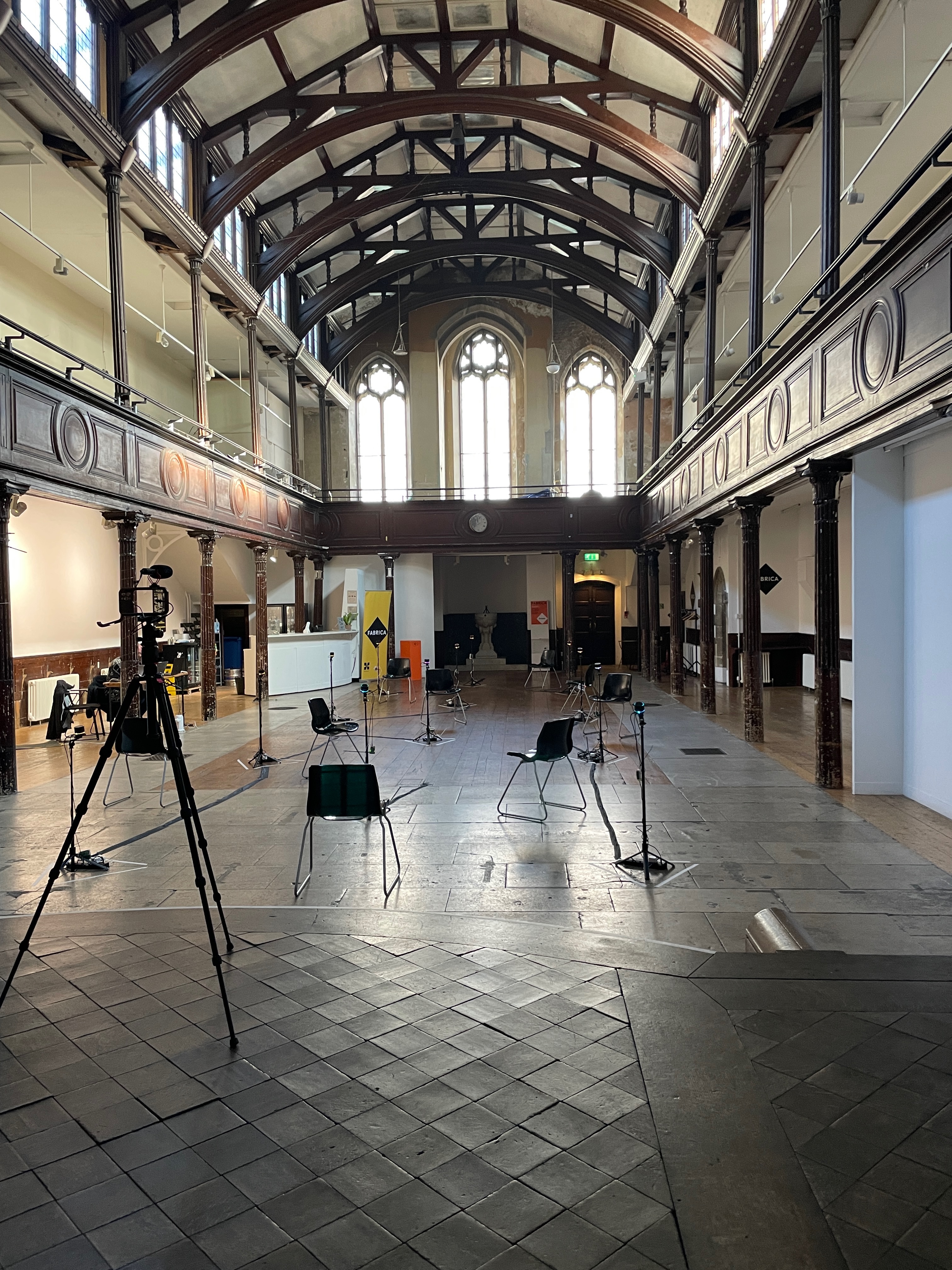
Making Space at Fabrica, Brighton, 2026

Seven Stones Research, Making Space Residency at Fabrica, 2026
Making Space Residency at Fabrica, 2026

Making Space Residency at Fabrica, Brighton, 2026

The current project proposes a new research direction: if the archive can speak, what else can it make?

The dreaming archive is a generative system given something like embodied personhood. Built from bathymetric surveys, Lloyd's insurance records, oil drift and pollution data, nautical charts, natural history records, and AI-generated speculative narratives, it will be designed not to produce output on instruction but to describe its own internal state — and the physical outputs will be the trace of that attempt.

The system will be prompted not to illustrate the archive but to strain toward it. The outputs will carry the logic of maritime mapping, geological drift, and damaged record without reproducing them directly. They will feel like errors, or like dreams.

Two material research strands will test how this works in practice:

Procedural drawing — archive-generated sequences rendered as mark, line, and pattern using a pen plotter. The drawings will carry the logic of drift and damage: dense accumulations of coordinate data, interrupted by the gaps where the record fails. Output will be on paper, at the scale of a large drawing or print, using the visual language of chart and survey turned strange.

Woven textile — working with a specialist Jacquard or lace machine institution to understand how archive data might become loom-readable structure. Fabric accretes, layer by layer, in the same way a wreck does. The Jacquard loom is the literal ancestor of computing — punched cards reading pattern as instruction. This connection is not decorative; it is central to the project's argument about what archives are and what they can become.

The physical outputs of this research will not illustrate the Torrey Canyon. They will be what the archive looks like when it tries to make itself understood.